Archive for January, 2026
Financial Literacy: School Curriculum Changes on the Horizon in the UK
The UK’s financial literacy rate ranks among the lowest when compared to similar economies, with some research finding that 73% of the country falls below the financial literacy benchmark.
This has very real implications for day-to-day life, with poor money literacy leaving people “worse off” financially.
Money habits form as early as 7, meaning schools can play a big role in equipping young people with the financial skills they need to navigate life. But research indicates schools aren’t yet meeting the mark.
In November, the government announced plans to target this education gap as part of its broader curriculum changes.
This week at The Salary Calculator, we’ll explore what those changes mean, what’s ahead, and avenues for continued financial education.
Low financial literacy rates
In 2024, abrdn’s Savings Ladder Index found that the UK’s financial literacy was “concerningly low.”
The global investment company asked people the “big three” questions on interest, inflation and diversification, and found that 44% (23.3 million UK adults) were classified as having poor financial literacy.
According to the firm, this lack of financial literacy has broader implications for people, including being significantly less likely to have savings and a “pension penalty” of £10,000.
Following the findings, the investment company, along with MyBnk (now Money Ready) and the Just Finance Foundation, penned an open letter to the government, highlighting the role of financial education in driving social mobility.
“Too many people still leave school unprepared”
Financial education was introduced into the curriculum back in September 2014 as part of Citizenship Education for those aged 11 to 15, but implementation has been patchy.
 “Despite financial education being on the secondary curriculum for over a decade, too many people still leave school unprepared,” said Leon Ward, CEO, Money Ready.
Research suggests that just two in five young adults are financially literate, while more than half (61%) do not remember receiving financial education at school.
A recent report from the All-Party Parliamentary Group (APPG) on Financial Education for Young People shared further insight into these findings. In particular, the APPG report found a disparity in financial education both across and within UK nations, a lack of support for post-16 education, and a digital financial literacy curricula lag.
Curriculum changes
The government’s Curriculum and Assessment Review was launched in 2024 to assess the education landscape — the first time the curriculum had been reviewed since the early 2010s.
The report, published just before Christmas, underlined that children’s money habits begin early and go on to shape their financial capabilities later on in life, while also spotlighting that children are increasingly making digital financial transactions themselves.
However, the report shared that, in practice, the financial education content already in the national curriculum is not always taught, and almost half of parents believe that too little time is spent on financial management skills.

The report recommended that, going forward, students should first be introduced to mathematical concepts (such as percentages) in Maths before learning about their practical applications (like compound interest and loans) in Citizenship.
It was also recommended that Citizenship, and its financial education elements, be introduced as part of the national curriculum at Key Stages 1 and 2 — one of the government’s key reforms.
The final revised national curriculum is set to be published by Spring 2027.
Money Ready’s Ward called the review’s recommendations on financial education a “great step forward,” but said that now the focus must be on “making practical money lessons a reality,” adding that schools need support to embed impactful money lessons, with topics including “budgeting, earning, credit and saving.”
Indeed, a 2024 report from the Social Market Foundation found that 54% of primary and 75% of secondary teachers said that they do not have enough time on their timetable to give their students a “strong foundation” in financial literacy.
“The earlier children begin to understand money, the better equipped they will be”
Meanwhile, 36% of primary teachers said they would feel either ‘not very confident’ or ‘not at all confident’ in teaching financial education if it were to become part of the school curriculum, underscoring the importance of teacher training, development and guidance in this area.
Abby Birch, a financial wellbeing and money expert, said the planned curriculum changes are “welcome” after many years of campaigning to make financial literacy compulsory in schools.
“These are fundamental life skills, and the earlier children begin to understand money, the better equipped they will be to make informed and confident financial decisions,” noted Birch.
For Birch, in terms of priorities, the focus should be on personal budgeting and day-to-day money management, alongside building financial resilience, including the role of emergency funds.
“As pupils progress, it is important they learn how debt works, and gain a basic understanding of mortgages and home buying, which are major financial decisions many adults feel unprepared for,” she added.
Indeed, 2025 research from mortgage broker Boon Brokers found that 58% of young adults aged 18–24 surveyed said their school did not provide facilities to learn about mortgages.
Continued financial education
But, with the new curriculum not due to be implemented until 2028, it will be some time before students see the benefits of these financial education changes.
“These changes will take time to embed and will not impact today’s workforce,” explained Birch, adding: “In the meantime, it remains vital that employers continue to support financial wellbeing in the workplace, so people can build confidence and capability with money now.”
Research shows that employees would welcome this kind of support, too, with a Pluxee study of HR professionals finding that 68% reported a rise in requests for financial education or support initiatives in 2024.
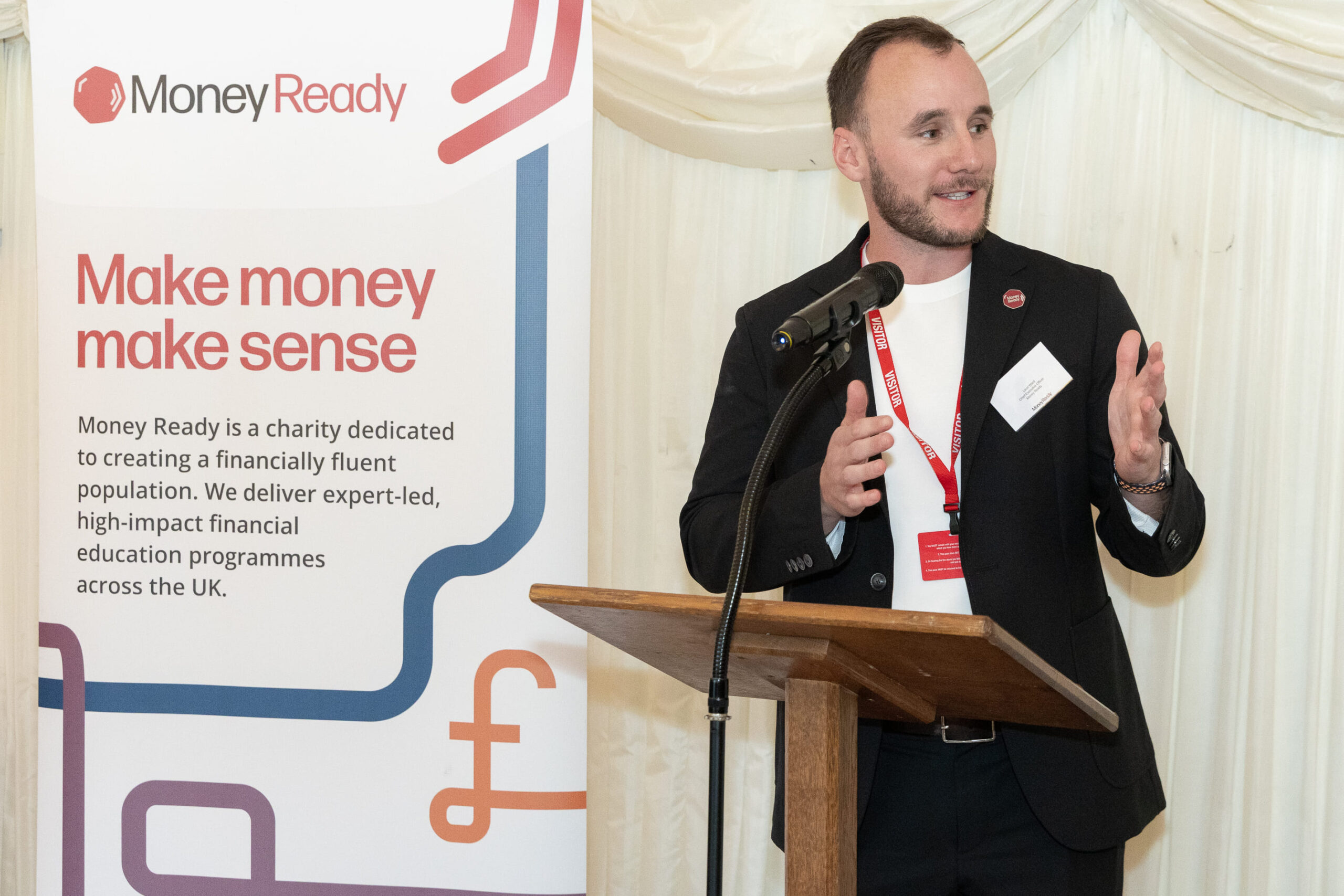
Leon Ward, CEO, Money Ready
“Financial education equips people of all ages to flourish”
Outside the workforce, Ward noted that, in addition to providing financial education in primary and secondary schools, Money Ready helps people manage their money at “key transition stages,” from entering higher education and beginning work to starting a family and buying a home.
Sites like MoneySavingExpert also provide personal finance help for both children and adults, offering a free personal finance course, MSE’s Academy of Money, available through the Open University. The course covers a wide range of topics, from budgeting effectively and income tax to borrowing money responsibly, savings, and pensions.
Of course, our own Salary Calculator helps show the effect that income tax, NI, student loan and other deductions can have on your take-home pay.
Organisations like Citizens Advice, Money Helper, StepChange and Turn2us can also provide guidance and support across a variety of personal finance areas, including debt, budgeting and money management.
“Financial education equips people of all ages to flourish, because the language of money is one we all deserve to understand,” said Ward.
None of the content on this website, including blog posts, comments, or responses to user comments, is offered as financial advice. Figures used are for illustrative purposes only.
Categories
Tags
-
50% tax
2022
April 2010
April 2011
April 2012
budget
coronavirus
cost of living
cost of living crisis
covid-19
debt
dollar
economics
Economy
election
Employed and Self Employed
Foreign Currency
foreign exchange rates
HMRC
holiday
holiday money
house prices
houses
income tax
interest rates
Jobs
Loans
Mortgages
national insurance
Pay As You Earn
pension
Pensions
personal allowance
pound
recession
recovery
savings
Self Assessment
self employed
self employment
student loans
tax rates
The Salary Calculator
unemployment
VAT
Sponsored Links
Archive
- February 2026
- January 2026
- December 2025
- November 2025
- October 2025
- September 2025
- August 2025
- July 2025
- June 2025
- May 2025
- April 2025
- March 2025
- November 2023
- September 2023
- August 2023
- July 2023
- June 2023
- May 2023
- April 2023
- March 2023
- February 2023
- January 2023
- December 2022
- November 2022
- October 2022
- September 2022
- August 2022
- July 2022
- June 2022
- May 2022
- April 2022
- March 2022
- February 2022
- January 2022
- December 2021
- November 2021
- October 2021
- September 2021
- August 2021
- July 2021
- June 2021
- May 2021
- April 2021
- February 2021
- January 2021
- December 2020
- November 2020
- October 2020
- September 2020
- August 2020
- July 2020
- June 2020
- May 2020
- April 2020
- March 2020
- February 2020
- November 2019
- September 2019
- April 2019
- March 2019
- December 2018
- April 2018
- March 2018
- January 2018
- May 2017
- March 2017
- February 2017
- September 2016
- June 2016
- March 2016
- February 2016
- January 2016
- June 2015
- April 2015
- March 2015
- February 2015
- January 2015
- November 2014
- October 2014
- July 2014
- June 2014
- May 2014
- March 2014
- February 2014
- January 2014
- November 2013
- October 2013
- August 2013
- July 2013
- June 2013
- May 2013
- April 2013
- March 2013
- February 2013
- January 2013
- December 2012
- November 2012
- October 2012
- September 2012
- August 2012
- July 2012
- June 2012
- May 2012
- April 2012
- March 2012
- February 2012
- January 2012
- December 2011
- October 2011
- May 2011
- April 2011
- March 2011
- January 2011
- December 2010
- August 2010
- July 2010
- June 2010
- May 2010
- April 2010
- March 2010
- February 2010
- January 2010
- December 2009
- November 2009
- October 2009
- September 2009
- August 2009
- July 2009
- June 2009