Personal finance
Financial Literacy: School Curriculum Changes on the Horizon in the UK
The UK’s financial literacy rate ranks among the lowest when compared to similar economies, with some research finding that 73% of the country falls below the financial literacy benchmark.
This has very real implications for day-to-day life, with poor money literacy leaving people “worse off” financially.
Money habits form as early as 7, meaning schools can play a big role in equipping young people with the financial skills they need to navigate life. But research indicates schools aren’t yet meeting the mark.
In November, the government announced plans to target this education gap as part of its broader curriculum changes.
This week at The Salary Calculator, we’ll explore what those changes mean, what’s ahead, and avenues for continued financial education.
Low financial literacy rates
In 2024, abrdn’s Savings Ladder Index found that the UK’s financial literacy was “concerningly low.”
The global investment company asked people the “big three” questions on interest, inflation and diversification, and found that 44% (23.3 million UK adults) were classified as having poor financial literacy.
According to the firm, this lack of financial literacy has broader implications for people, including being significantly less likely to have savings and a “pension penalty” of £10,000.
Following the findings, the investment company, along with MyBnk (now Money Ready) and the Just Finance Foundation, penned an open letter to the government, highlighting the role of financial education in driving social mobility.
“Too many people still leave school unprepared”
Financial education was introduced into the curriculum back in September 2014 as part of Citizenship Education for those aged 11 to 15, but implementation has been patchy.
 “Despite financial education being on the secondary curriculum for over a decade, too many people still leave school unprepared,” said Leon Ward, CEO, Money Ready.
Research suggests that just two in five young adults are financially literate, while more than half (61%) do not remember receiving financial education at school.
A recent report from the All-Party Parliamentary Group (APPG) on Financial Education for Young People shared further insight into these findings. In particular, the APPG report found a disparity in financial education both across and within UK nations, a lack of support for post-16 education, and a digital financial literacy curricula lag.
Curriculum changes
The government’s Curriculum and Assessment Review was launched in 2024 to assess the education landscape — the first time the curriculum had been reviewed since the early 2010s.
The report, published just before Christmas, underlined that children’s money habits begin early and go on to shape their financial capabilities later on in life, while also spotlighting that children are increasingly making digital financial transactions themselves.
However, the report shared that, in practice, the financial education content already in the national curriculum is not always taught, and almost half of parents believe that too little time is spent on financial management skills.

The report recommended that, going forward, students should first be introduced to mathematical concepts (such as percentages) in Maths before learning about their practical applications (like compound interest and loans) in Citizenship.
It was also recommended that Citizenship, and its financial education elements, be introduced as part of the national curriculum at Key Stages 1 and 2 — one of the government’s key reforms.
The final revised national curriculum is set to be published by Spring 2027.
Money Ready’s Ward called the review’s recommendations on financial education a “great step forward,” but said that now the focus must be on “making practical money lessons a reality,” adding that schools need support to embed impactful money lessons, with topics including “budgeting, earning, credit and saving.”
Indeed, a 2024 report from the Social Market Foundation found that 54% of primary and 75% of secondary teachers said that they do not have enough time on their timetable to give their students a “strong foundation” in financial literacy.
“The earlier children begin to understand money, the better equipped they will be”
Meanwhile, 36% of primary teachers said they would feel either ‘not very confident’ or ‘not at all confident’ in teaching financial education if it were to become part of the school curriculum, underscoring the importance of teacher training, development and guidance in this area.
Abby Birch, a financial wellbeing and money expert, said the planned curriculum changes are “welcome” after many years of campaigning to make financial literacy compulsory in schools.
“These are fundamental life skills, and the earlier children begin to understand money, the better equipped they will be to make informed and confident financial decisions,” noted Birch.
For Birch, in terms of priorities, the focus should be on personal budgeting and day-to-day money management, alongside building financial resilience, including the role of emergency funds.
“As pupils progress, it is important they learn how debt works, and gain a basic understanding of mortgages and home buying, which are major financial decisions many adults feel unprepared for,” she added.
Indeed, 2025 research from mortgage broker Boon Brokers found that 58% of young adults aged 18–24 surveyed said their school did not provide facilities to learn about mortgages.
Continued financial education
But, with the new curriculum not due to be implemented until 2028, it will be some time before students see the benefits of these financial education changes.
“These changes will take time to embed and will not impact today’s workforce,” explained Birch, adding: “In the meantime, it remains vital that employers continue to support financial wellbeing in the workplace, so people can build confidence and capability with money now.”
Research shows that employees would welcome this kind of support, too, with a Pluxee study of HR professionals finding that 68% reported a rise in requests for financial education or support initiatives in 2024.
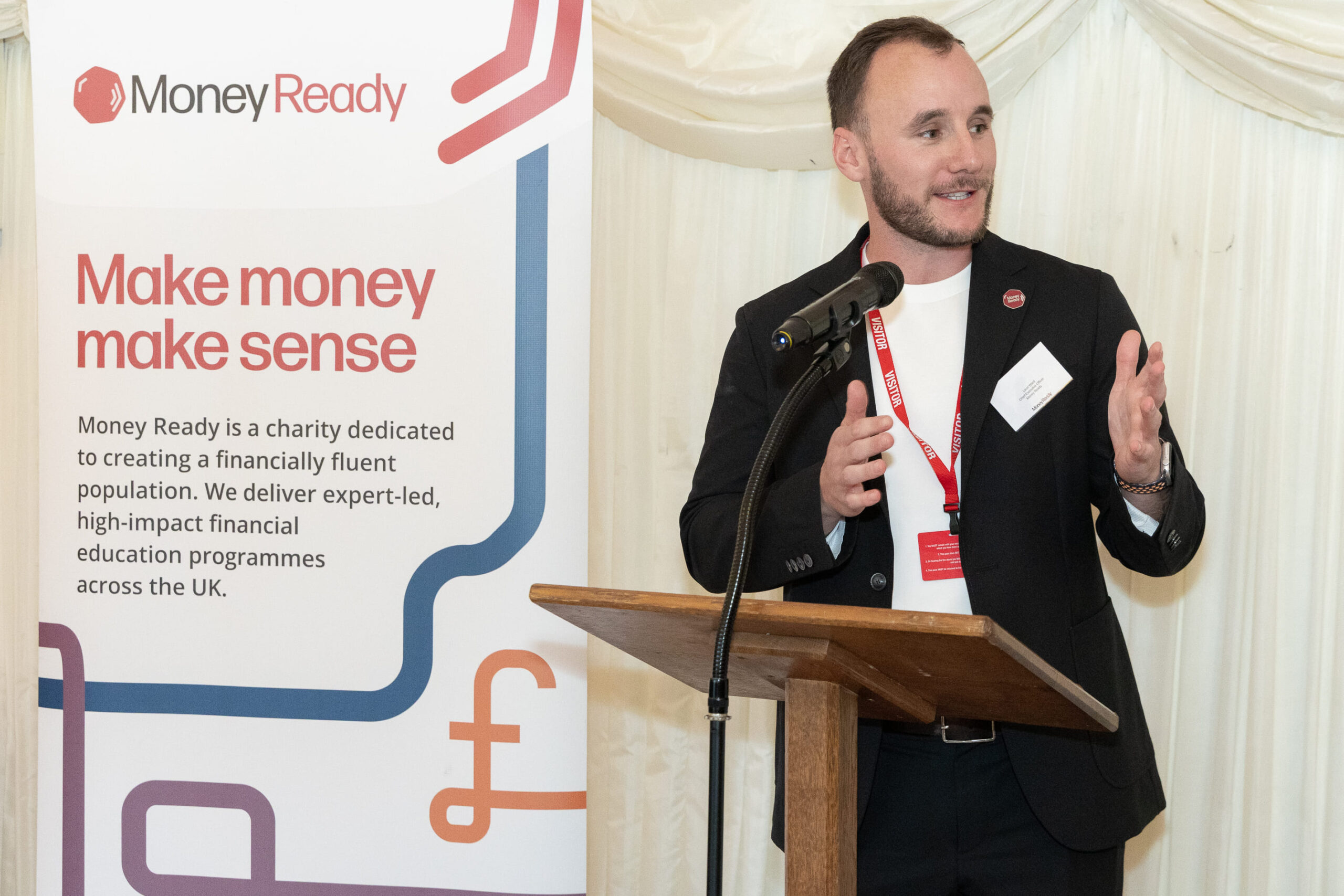
Leon Ward, CEO, Money Ready
“Financial education equips people of all ages to flourish”
Outside the workforce, Ward noted that, in addition to providing financial education in primary and secondary schools, Money Ready helps people manage their money at “key transition stages,” from entering higher education and beginning work to starting a family and buying a home.
Sites like MoneySavingExpert also provide personal finance help for both children and adults, offering a free personal finance course, MSE’s Academy of Money, available through the Open University. The course covers a wide range of topics, from budgeting effectively and income tax to borrowing money responsibly, savings, and pensions.
Of course, our own Salary Calculator helps show the effect that income tax, NI, student loan and other deductions can have on your take-home pay.
Organisations like Citizens Advice, Money Helper, StepChange and Turn2us can also provide guidance and support across a variety of personal finance areas, including debt, budgeting and money management.
“Financial education equips people of all ages to flourish, because the language of money is one we all deserve to understand,” said Ward.
None of the content on this website, including blog posts, comments, or responses to user comments, is offered as financial advice. Figures used are for illustrative purposes only.
Personal finance education in the UK
Although personal finance is now an educational requirement in the UK, it’s well known the curriculum around this topic is not up to scratch. Many leave school without a real grasp on the ins and outs of personal finance, whether that’s interest rates, mortgages, or managing money, and as a result, research shows this leaves youngsters vulnerable to making harmful decisions around their finances.
Financial literacy empowers people to make informed choices about how, when and where they spend their money, and ensure they’re not left open to unsustainable borrowing, and unwise investments that could lead them down a road of debt.
At The Salary Calculator, we’ll explore why education around personal finances in the UK needs to improve, and the consequences of financial illiteracy.
A lack of financial literacy and its consequences
According to research, we begin to develop “vital money habits and skills” between ages three and seven. Despite this, only around 38% of children and young people receive some form of financial education while in school, and in 2016, half of Brits failed a financial literacy test run by the OECD, placing Britain significantly below France, Norway and Austria.
The consequences of this lack of financial literacy, means that young people are largely unprepared to deal with the different financial situations they are confronted with as they move into adulthood.
Research from Santander UK has even found that two-thirds of young people attribute their debt problems to a lack of financial education. Meanwhile, an inquiry commissioned by the Centre for Social Justice (CSJ) in partnership with Lowell, found that 24 million adults are not confident handling their money on a day to day basis, and one in eight young adults who took on a “buy now, pay later” credit agreement were eventually contacted by a debt collector.
Speaking about what the Santander UK study shows, Mike Regnier, CEO of Santander UK, said that fostering key money management skills at “an early age” will ensure that future generations leave school “equipped with the foundations for financial independence, and the skills to make better financial decisions.”
Meanwhile, John Pears, UK Chief Executive at Lowell, said that now, more than ever, with the cost of living crisis reaching extreme levels, financial literacy would be a “strong barrier.” Pears admitted that as a country “we just aren’t good enough at it,” and outlined that the company’s own customers have outlined how “ill-prepared” they are when facing debt. He added: “The lack of financial literacy and budgeting skills creates spirals of debt that are hard to break and have a long-lasting impact, individually and on our economy.”
Education around personal finance should start at school
The CSJ and Lowell conducted a poll of 4,000 adults and found that 44% of all adults, and two-thirds of those aged 18 to 34, believe that if they had received financial education, for example around basic money skills, they would be more financially prepared for life and its challenges. Yet, in the 2021-22 Young Person’s Money Index report, just 8% of young people said they received most of their financial education at school.
Yet, according to Fintec, when children receive education around finances at school, they’re more likely to handle their finances better, save up frequently, have a bank account and generally feel more confident navigating finances.
Speaking about the advantages of educating children about finances from a young age, Martin Lewis, the founder of MoneySavingExpert.com, said that children are “professionals at learning.” He added: “Teaching children is easier than teaching adults. That’s why, in our education campaigns, we focus on children – because the job of educating society is so much bigger. If you start with children and keep doing it over 30, 40 years, you’re going to work through [society] better.”
Programs and initiatives to enhance education
Back in 2014, financial education was brought into the secondary school curriculum, as a component of the “citizenship” element of the national curriculum at key stage 3 and 4. This was introduced as a way of providing students with guidance on managing money, and tools to plan for their future financial needs.
However, despite being compulsory, uptake of financial education in schools is actually quite low. According to Russell Winnard, a former teacher and head of programmes and services at Young Money, there is room for improvement in this area. In 2017, he outlined: “It is compulsory in every secondary school, though that does not apply to academies and free schools. Around 35% – 45% of schools were actually delivering financial education in 2014. Two years on and we estimate it’s still only 40% doing so.”
This is something that has been echoed more recently by Martin Lewis who expressed similar sentiments. Speaking to Future Learn, Lewis said: “There is financial literacy on the national curriculum, but it’s guidance rather than compulsory for many schools. It’s only on the curriculum for secondary schools in England. We have a charity called Young Money where we have a free financial education textbook in every school now, and that’s been incredibly successful, but we still have a problem that some schools don’t teach it, aren’t trained to teach it and won’t.”
To tackle the financial education gap, a number of recommendations have been made by CSJ. Some of these recommendations include:
- Introducing a new legal requirement for students to receive “at least three ‘experiential’ financial learning lessons” over the course of their school career;
- A new ‘whole-family’ approach to financial education. According to the report, this would involve bringing in parents and carers into the equation, and introducing what the CSJ called community infrastructure like Family Hubs;
- Bringing in funding for care leavers and disadvantaged young adults to attend ‘just-in-time’ financial education programmes to reduce cases of rent-arrear driven homelessness;
- Introducing adult financial education as part of the Government’s £560 million adult numeracy scheme, ‘Multiply’;
- Completing of the welfare reforms initiated in 2012 by rolling out ‘Universal Support’ to provide vulnerable people with digital and financial skills;
- Promoting the ‘Help to Save’ scheme to increase uptake among those who are eligible.
Commenting on the changes that need to be implemented, Robert Halfon MP, Education Select Committee Chair, said: “We must be bolder – critically, by adding financial education to the curriculum in primary school in PHSE lessons where money management remains absent in England. Adults of all ages also need opportunities to develop critical financial skills throughout their life, whether that be in the workplace, further education or via the welfare system.
The potential 2022 recession and how it might affect personal finances
With slow growth following the pandemic and the skyrocketing cost of living, experts have warned that the UK could be heading towards a summer recession. According to research, consumer confidence is now at its lowest in years, even lower than the 2008 financial crisis. This near-record low is indicative of an economic downturn. It’s not just the UK that’s headed for trouble, either, there is a cloud forming around the global economy.
With so much instability and uncertainty across the UK, it’s understandable that many will be concerned about this news, and at The Salary Calculator, we’ll walk you through:
- What the economy is looking like right now
- How a potential recession could affect personal finances
- How you can safeguard yourself against a potential recession
Is there a recession ahead?
A recession, by definition, occurs when negative economic growth takes place across two successive quarters. According to financial forecasts, the economy is likely to shrink by 0.2% between April and June. Recently, the pound also hit its lowest level against the dollar since September 2020.
So, while it’s not imminent, experts say the risk of a recession is rising. Early this month, Deutsche Bank’s chief UK economist Sanjay Raja said: “We continue to think that the risk of recession remains on the rise,” adding: “This is something we will be tracking very closely in the coming months. Consumer confidence data is already consistent with recessionary levels.”
Commenting on the financial forecasts by the industry, Abena Oppong-Asare, shadow exchequer secretary to the Treasury, said that while the figures are “concerning,” they come as “no surprise,” referring to what she called the “double whammy” of the National Insurance increase alongside soaring energy bills.
She added: “Collapsing consumer confidence shows how the cost of living crisis is weighing down growth. How many warnings like this does the chancellor need to grasp the seriousness of the cost of living crisis?”
How might a recession affect you and your personal finances?
Recessions can have a hugely devastating impact on personal finances. Businesses, especially small businesses, typically take a big hit when a recession swoops in. This can result in companies pursuing redundancies, cutting jobs, and pausing new hires. Of course, this can have a knock-on effect on employees. Back in the 2008 recession, unemployment reached its highest rate since 1995 at 8.4%.
Of course, job losses can lead to subsequent financial difficulties, for example, challenges paying bills, mortgages, and rent payments, which can lead to individuals taking on debt to cope. Alongside this, recessions often lead to reduced economic output and consumer spending falls, too.
How can you safeguard yourself against a potential recession?
With so much discussion around the state of the economy, and lots of undeniably concerning headlines, it’s likely that many are worried about what might happen to their personal finances, and will be seeking to find ways to safeguard themselves. However, it’s important not to panic, and note that there are steps you can take to protect yourself and your savings.
With increasing taxes, record inflation, and soaring living costs in the current financial climate, it may be difficult to put some money away and save. Experts, however, recommend that in the midst of a recession, people should try to build up some kind of emergency fund. Typically, common sage advice is to build an emergency fund equivalent to six months’ worth of expenses. This can be done through small contributions, and you can even set up automatic payments to inject money into your emergency fund consistently.
Another way to protect yourself in the face of a potential recession is to cut back on your expenses. Take a look at your overall lifestyle and see if you’re overspending money, or if there’s a subscription you wouldn’t miss and could cut out. Douglas Boneparth, president of Bone Fide Wealth and a member of the CNBC Digital Financial Advisor Council, says it’s a good idea to take stock of your whole life, too. He recommends individuals ask themselves the important questions: “How do you feel about your job? Do you feel safe? What is the risk in your life right now? Did you just have a child? … Are you in good health?” After taking time to reflect on one’s outgoings, creating a reasonable budget is much more doable, and it can also make clearing your personal debt a bit easier.
Some experts advise diversifying and drip-feeding investments. Gold is a go-to for some. According to Adrian Lowry, writing in The Independent, gold has been “lauded variously as a hedge against inflation, a counterpoint to a weakening US dollar, a safe haven in times of crisis, and something to hold in portfolios that are not correlated to equities, as a diversification asset.” That said, it’s also important to be aware that gold is fairly volatile and can be subject to significant price fluctuations, meaning that it can dramatically drop in value as well as increase.
On the other hand, Sarah Coles, senior personal finance analyst at Hargreaves Lansdown, recommends that people do not shy away from investment, but if worried about investing their savings in one place, they should drip-feed investments instead. She explained that this enables you to “benefit from pound-cost averaging by continually adding to your investments through different market conditions and economic cycles.” Investment Strategist Whitney Sweeney at Schroders also says that diversification “is key.”
UK to become a global crypto hub
The UK government recently announced its plans to make the country a “global hub” for the crypto industry. This announcement comes after the industry criticised the UK for its stringent regulatory approach and a consultation was also conducted by the government in 2021.
However, while this announcement means that the UK will be set on a path to exploit the potential of crypto, some critics are not so sure the move is a good idea, claiming that cryptocurrency is a hotbed for criminal activity.
At The Salary Calculator, we’ll walk you through:
- How the UK will become a cryptohub
- What stablecoins are
- What the move means for the UK
UK to become home to a crypto hub
Back in 2021, the government held a consultation on its approach to cryptoasset regulation, with a particular focus on stablecoins. HM Treasury published a response to this consultation and call for evidence this month, and with that, made a number of announcements, including that the UK is to become a global hub for cryptoasset technology and investment.
Alongside this, the government said that stablecoins will be brought within regulation, and that it would legislate for a ‘financial market infrastructure sandbox’ named ‘CryptoSprint,’ which it said would encourage firms to innovate, and will be overseen by the Financial Conduct Authority (FCA). Likewise, a new body, namely the Cryptoasset Engagement Group, is to form and will see the government work with crypto companies. The government will also create an NFT (non-fungible token) via The Royal Mint.
Commenting on the government’s decision to move into the crypto space, Chancellor Rishi Sunak said that it was part of his ambition to make the UK a “global hub for cryptoasset technology.” He went on to say that the measures will help ensure firms “can invest, innovate and scale up” the country. Sunak also said with this policy change, the government hopes to attract the “businesses of tomorrow.”
This announcement that the UK will become a cryptohub comes shortly after its top financial regulator issued a warning that those investing in crypto “should be prepared to lose all their money.”
What are stablecoins?
The world of crypto is undeniably steeped in confusion, and you’re not alone if, when hearing the word stablecoin, you find yourself scratching your head. Stablecoins are a form of cryptocurrency which are matched against typical currencies, like, for example, the dollar or the pound.
While both stablecoins and other cryptocurrencies use blockchain technology, stablecoins are different from other cryptocurrencies like Bitcoin or Ethereum, which are much more volatile. Stablecoins will only change in value alongside changes in regular currency. This means that unlike Bitcoin, which seemingly crashes on a regular basis, wiping over $1 trillion from market value, it is just as its name says, stable, or as stable as a currency can be. According to the Treasury’s recent announcement, these coins will be regulated the same way the pound is regulated.
Is this a positive development?
While stablecoins, which came into existence back in the mid-2010s, are arguably a safer form of cryptocurrency, they do somewhat contradict the philosophical basis of such currency. Cryptocurrencies like Bitcoin were created to be decentralised, so there was no need for a trusted third party or governing body. As Ronald Mulder explains, “it is based on code, mathematics, cryptography, and game theory.”
Alpay Soytürk, Chief Regulatory Officer at Spectrum Markets, also points out that another problem with stablecoins are their “unknown or insufficient or both – reserves.” For example, in 2021, writing in The Conversation, Jean-Philippe Serbera, a Senior Lecturer at Sheffield Hallam University, highlighted that while stablecoin providers promise they have reserves “worth 100% of the value of their stablecoins,” this is rarely the case. He gave the example of Tether, which holds 75% of its reserves in cash and equivalents, and USDC, which had 61% as of May 2021.
That said, cryptocurrencies, in general, are increasingly gaining popularity. One report, “Demystifying Crypto: Shedding light on the adoption of digital currencies for payments in 2022,” found that more people are adopting cryptocurrencies for online payments. Young people, in particular, are said to be in favour of using crypto payments. In 2021, for example, it was found that 30% of young people were open to these kinds of payments, and a further 23% of online businesses say they are planning on expanding their payment options to include crypto within the next few years.
Aside from using crypto for payments, studies show that more and more Millennials are investing in crypto. A recent survey found that 38% had invested in crypto to diversify their investments. Likewise, a Royal Mint survey found that the same percentage of Gen Z’s are following suit.
Moreover, despite the UK government seemingly welcoming crypto with open arms, it is addressing the concerns of some, such as Bank of England governor Andrew Bailey who warns that such currencies are a “front line” in criminal scams, and an “opportunity for the downright criminal.” According to John Glen, economic secretary to the Treasury, the government is aware of what kind of nefarious opportunities crypto presents but assured naysayers that it “won’t compromise” when it comes to anti-money laundering regulations.
That said, it is perhaps worth noting the other psychological harms associated with crypto trading. According to addiction experts, some young men trading crypto have begun expressing symptoms of and seeking help for problem gambling. Speaking to The Times, Barry Grant, project manager of Extern Problem Gambling, said that those traders who he had encountered displayed “classic gambling addiction progression”. He explained: “You dabble with it. You do something small, you’re having a bit of fun. Maybe you’re doing a bit of research about it. Then, you have a big win.”
The rising rent issue
Rent prices in the UK are rising at the fastest rate in five years, further hiking up the cost of living as millions of people feel the squeeze. As the ‘cost of living crisis’ continues, politicians have commented that it’s a “very difficult time” but are failing to take meaningful action.
As more and more low-income tenants are forced to make ‘heat, eat or pay rent’ choices, many argue there has never been a better time to reintroduce rent controls to help address the crisis.
The latest news is undeniably distressing, but at The Salary Calculator, we’ll make sure you’re up-to-date with the latest on personal finance. In this article, we’ll walk you through:
- Why rent prices are rising
- What the experts are saying about the situation
- Whether calls for rent controls are being taken seriously
What’s going on with rent prices?
In the UK, rent prices are on the rise, with statistics from ONS showing that this rise is at the fastest rate in five years. Research shows that the average annual UK rental growth has also reached a 13 year high, with rents increasing by 8.3 % by the end of last year. Unfortunately, there is further bad news, with Rightmove predicting that rent will increase by another 5% in the year ahead. Reports have revealed Wales and the northwest of England saw the largest increase in asking rents. There, rent prices increased by 12%, while in the southwest of England, rent rose by 11%.
Of course, this pinch is pushing many to the brink. Back in 2021, Citizens Advice revealed that half a million private renters in the UK were behind on their rent, with an estimated £360 million owed UK-wide, and within the last year, the situation has not improved. Together, housing charity Crisis and Heriot-Watt University have forecast that over 66,000 more people will be homeless by 2024. Likewise, a survey of 155 English councils found nine in ten town halls expect to see a surge of evictions from private rented homes in 2022.
So, exactly why are rent prices so high? Well, right now, there’s a high demand for renting and a low number of rental properties available, which is in part due to Covid-19’s disruption to the housing market. Propertymark, the membership body for property agents in the UK, has even warned that the situation is likely to worsen, with more landlords planning to exit the market due to “increasing regulation and taxation.”
Sarah Coles, a senior personal finance analyst at Hargreaves Lansdown, calls this predicament a “dual problem” for renters, whereby rents rise while there are fewer properties on the market to choose from. Speaking to i News, she said: “No wonder we’re hearing so many stories of renters getting dragged into bidding wars, where they’re forced to pay more than the advertised rent in order to have somewhere to live.”
What are the experts advising?
When faced with rent hikes, often it feels like landlords hold all the cards, and there is nothing you can do as a renter to fight back, however as a renter, there are a few things you can do.
Renters are well within their rights to question why their landlord is increasing their rent. Likewise, it’s important to remember that landlords can’t just increase their rent prices by how much they want or whenever they want.
Once you’ve found out why your landlord is hiking your rent, you can also try to negotiate on the price. When negotiating, Citizens Advice recommends that tenants look at similar properties in the area and use those rent prices as “evidence” to show why the hike shouldn’t go ahead or that it should go ahead at a lower rate. The organisation suggests that often landlords will prefer to negotiate rather than lose their tenants.
That said, negotiation isn’t always possible, and in situations where tenants feel like they’re running out of options, they can appeal to a tribunal for rent complaints.
Unfortunately, if you’ve exhausted all your options, you may have to look into downsizing, becoming a lodger, sharing a house with other tenants, or moving into a cheaper area. Speaking about the terrible ultimatum renters are being faced with, Coles said: “Those hoping to stay in their home for another year are facing huge rental hikes. If they can’t afford it, they face the horrible expense and upheaval of a move – as well as the prospect of trading down to something smaller or in a less expensive area.”
Calls for rental controls
It is undeniable that the housing market is out of control in the UK, and to combat this; some are calling for rental controls to be reintroduced back into the UK. Rental controls are regulations that ensure the affordability of housing, and place a cap on the amount a landlord can charge tenants when leasing a new property or renewing a lease. These controls were essentially removed back in the 1980s during the Thatcher era, with the Housing Act 1988.
Now, Sadiq Khan, Mayor of London, is leading the call for change in London, and in the past has said that introducing rent controls in London could act as a “blueprint” for other cities with out of control rent prices.
Elsewhere, in Bristol, local housing chief, Tom Renhard, is lobbying Ministers to access rent control powers and wants to involve other core cities with this plan. The cabinet member for housing and communities argues that while there are “some good landlords”, there are also “a lot of terrible ones.” Adding: “Some [landlords] aren’t doing the repairs even now when rents are going up. If you can’t afford to upkeep a home, then why are you renting it out? People deserve to live in a home that’s fit for human habitation.” Bristol City Council is subsequently held a “Renting Summit” on 2 March 2022 to explore this.
Categories
Tags
-
50% tax
2022
April 2010
April 2011
April 2012
budget
coronavirus
cost of living
cost of living crisis
covid-19
debt
dollar
economics
Economy
election
Employed and Self Employed
Foreign Currency
foreign exchange rates
HMRC
holiday
holiday money
house prices
houses
income tax
interest rates
Jobs
Loans
Mortgages
national insurance
Pay As You Earn
pension
Pensions
personal allowance
pound
recession
recovery
savings
Self Assessment
self employed
self employment
student loans
tax rates
The Salary Calculator
unemployment
VAT
Sponsored Links
Archive
- February 2026
- January 2026
- December 2025
- November 2025
- October 2025
- September 2025
- August 2025
- July 2025
- June 2025
- May 2025
- April 2025
- March 2025
- November 2023
- September 2023
- August 2023
- July 2023
- June 2023
- May 2023
- April 2023
- March 2023
- February 2023
- January 2023
- December 2022
- November 2022
- October 2022
- September 2022
- August 2022
- July 2022
- June 2022
- May 2022
- April 2022
- March 2022
- February 2022
- January 2022
- December 2021
- November 2021
- October 2021
- September 2021
- August 2021
- July 2021
- June 2021
- May 2021
- April 2021
- February 2021
- January 2021
- December 2020
- November 2020
- October 2020
- September 2020
- August 2020
- July 2020
- June 2020
- May 2020
- April 2020
- March 2020
- February 2020
- November 2019
- September 2019
- April 2019
- March 2019
- December 2018
- April 2018
- March 2018
- January 2018
- May 2017
- March 2017
- February 2017
- September 2016
- June 2016
- March 2016
- February 2016
- January 2016
- June 2015
- April 2015
- March 2015
- February 2015
- January 2015
- November 2014
- October 2014
- July 2014
- June 2014
- May 2014
- March 2014
- February 2014
- January 2014
- November 2013
- October 2013
- August 2013
- July 2013
- June 2013
- May 2013
- April 2013
- March 2013
- February 2013
- January 2013
- December 2012
- November 2012
- October 2012
- September 2012
- August 2012
- July 2012
- June 2012
- May 2012
- April 2012
- March 2012
- February 2012
- January 2012
- December 2011
- October 2011
- May 2011
- April 2011
- March 2011
- January 2011
- December 2010
- August 2010
- July 2010
- June 2010
- May 2010
- April 2010
- March 2010
- February 2010
- January 2010
- December 2009
- November 2009
- October 2009
- September 2009
- August 2009
- July 2009
- June 2009