Mortgages
The UK Mortgage Market: How to Navigate the Landscape in 2026
The new year brought with it big changes to mortgages, with expanded borrowing terms and rate cuts, continuing December’s price war.
Entering February, the tide has turned, with rates lifting again across a number of lenders.
This week at The Salary Calculator, we’ll explore what these changes mean for buyers, tips for navigating mortgage deals, and what’s ahead across the mortgage landscape.
Mortgage market changes
Last year, cuts to the UK base rate led to greater mortgage affordability, with lower borrowing costs across providers.
This trend continued into 2026.
According to Moneyfacts’ UK Mortgage Trends Treasury Report, in early January, the average two-year fixed mortgage rate was at 4.83%, down from 5.48% at the beginning of 2025, while the average five-year fixed rate was 4.91%, down from 5.25%.
But mortgage rates fell even lower. Lenders like NatWest, Barclays, Halifax and Nationwide all hit the headlines after significantly cutting their rates, some to as low as 3.5% for fixed-rate deals.
In January, the latter additionally announced it was extending its high loan‑to‑income (LTI) lending, enabling home movers and remortgaging customers to borrow up to six times their income.
And earlier in 2025, following updates to the Financial Conduct Authority’s (FCA) guidance, major lenders also relaxed their mortgage stress tests, which evaluate the impact of future interest rate rises on a borrower’s mortgage payments.
 This month, on the mortgage front, the trend of low rates has shifted.
A number of lenders have increased their rates, including Nationwide and NatWest, ahead of the Bank of England’s (BoE) base rate decision — which was ultimately held at 3.75% — underscoring the market’s unpredictability.
Nationwide has announced it is increasing its rates by 0.19 percentage points, Barclays by up to 0.15 percentage points and Natwest by 0.10 percentage points.
Those who are now at the end of their low-cost five-year fixed terms will also be bracing themselves for a hike.
Responding to the base rate decision, Ben Thompson, Director of Home Moving Strategy, Mortgage Advice Bureau, said the BoE had “opted for the safety of the sidelines.”
“Despite inflation moving in the right direction, the MPC clearly isn’t ready to hit the accelerator on further rate cuts yet. That said, we still hope for a couple more cuts this year before we get close to some sort of new equilibrium,” he added.
What does this mean for buyers?
Thompson advised that, as lenders will have already priced in this latest hold, the deals on the shelves today are “likely as good as they’re going to get for a little while.”
“Arguably, the smart move right now isn’t trying to wait out the market for a perfect moment that might not come: it’s about finding a deal that actually fits your life and your budget,” said Thompson.
“Mortgage affordability has been a frustrating hurdle for first-time buyers”
And, with research from Twenty7tec finding that more than half of first-time buyers in the UK earn less than a combined £60,000 and house prices up 74 per cent over the last 20 years, mortgage affordability is front of mind for many as they navigate these recent shifts.
But some forecasts suggest the mortgage landscape remains broadly positive, and the BoE also shared that the Bank Rate is “likely to be reduced further.”
 “Mortgage affordability has been a frustrating hurdle for first-time buyers,” commented Rachel Springall, Finance Expert at Moneyfactscompare.co.uk. “Thankfully, falling mortgage rates and stress test relaxation over the past 12 months is giving buyers a better chance to secure a deal.”
Springall said that the relaxation in stress testing can help ease affordability constraints, and noted that more lending at higher Loan-to-Value (LTV) ratios was evident last year, adding that further growth is looking “promising” in 2026.
Rachel Geddes, Strategic Lender Relationship Director, Mortgage Advice Bureau, echoed this: “The Bank of England reducing rates in recent months is excellent news for homebuyer affordability.”
Geddes explained that lower monthly payments not only ease the pressure on finances but also provide the flexibility to reduce mortgage terms, keeping repayments at a “comfortable level” and enabling homebuyers to potentially pay off their home much sooner than originally planned.
Geddes called the combination of rate cuts and expanded borrowing criteria a “game-changer” for those who felt priced out of their ‘next step’ property.
However, against the backdrop of product choice being at its highest level in years, and lenders “actively wanting to lend,” speaking to an adviser is essential, Geddes said.
“They can cut through the noise to find the specific deal that aligns with your financial goals,” she noted.
Springall shared a similar sentiment: “Seeking independent advice is wise to pick a mortgage which provides the best overall value, both with an attractive rate, incentives and low or zero application fees.”
What’s ahead in 2026?
Looking ahead, Springall said that innovation is set to become a “key talking point” this year, with expanding options for first-time buyers and modernising regulation to be reviewed by the Financial Conduct Authority.
Indeed, the FCA has set out its priorities for its mortgage market reforms, one of which is aimed at people with different working patterns and income levels at different stages of life.
This reform aims to simplify mortgage rules to allow more flexible products for those with variable incomes, making it easier for more people to get on the housing ladder.
“…there does need to be more progress to address the lack of affordable housing”
According to Springall, building societies “lead the charge” in providing “innovative products” for new buyers, naming the Track Record Mortgage from Skipton Building Society, the Helping Hand offer from Nationwide and the Rent to Own mortgage from Hanley Building Society as examples.
She noted that the Government wants lenders “to do more” to support buyers to boost UK growth, but added that affordable housing is a key issue: “…there does need to be more progress to address the lack of affordable housing, as those with little equity are at risk if house prices plummet.”
For those questioning their next move in light of the recent changes, having all the facts is key, but Geddes advised that it’s important not to fall into the trap of “waiting for things to get better,” as market conditions can change.
“There are no guarantees that rates will drop significantly further, so focus on what is achievable for you today,” said Geddes.
None of the content on this website, including blog posts, comments, or responses to user comments, is offered as financial advice. Figures used are for illustrative purposes only.
Financial Literacy: School Curriculum Changes on the Horizon in the UK
The UK’s financial literacy rate ranks among the lowest when compared to similar economies, with some research finding that 73% of the country falls below the financial literacy benchmark.
This has very real implications for day-to-day life, with poor money literacy leaving people “worse off” financially.
Money habits form as early as 7, meaning schools can play a big role in equipping young people with the financial skills they need to navigate life. But research indicates schools aren’t yet meeting the mark.
In November, the government announced plans to target this education gap as part of its broader curriculum changes.
This week at The Salary Calculator, we’ll explore what those changes mean, what’s ahead, and avenues for continued financial education.
Low financial literacy rates
In 2024, abrdn’s Savings Ladder Index found that the UK’s financial literacy was “concerningly low.”
The global investment company asked people the “big three” questions on interest, inflation and diversification, and found that 44% (23.3 million UK adults) were classified as having poor financial literacy.
According to the firm, this lack of financial literacy has broader implications for people, including being significantly less likely to have savings and a “pension penalty” of £10,000.
Following the findings, the investment company, along with MyBnk (now Money Ready) and the Just Finance Foundation, penned an open letter to the government, highlighting the role of financial education in driving social mobility.
“Too many people still leave school unprepared”
Financial education was introduced into the curriculum back in September 2014 as part of Citizenship Education for those aged 11 to 15, but implementation has been patchy.
 “Despite financial education being on the secondary curriculum for over a decade, too many people still leave school unprepared,” said Leon Ward, CEO, Money Ready.
Research suggests that just two in five young adults are financially literate, while more than half (61%) do not remember receiving financial education at school.
A recent report from the All-Party Parliamentary Group (APPG) on Financial Education for Young People shared further insight into these findings. In particular, the APPG report found a disparity in financial education both across and within UK nations, a lack of support for post-16 education, and a digital financial literacy curricula lag.
Curriculum changes
The government’s Curriculum and Assessment Review was launched in 2024 to assess the education landscape — the first time the curriculum had been reviewed since the early 2010s.
The report, published just before Christmas, underlined that children’s money habits begin early and go on to shape their financial capabilities later on in life, while also spotlighting that children are increasingly making digital financial transactions themselves.
However, the report shared that, in practice, the financial education content already in the national curriculum is not always taught, and almost half of parents believe that too little time is spent on financial management skills.

The report recommended that, going forward, students should first be introduced to mathematical concepts (such as percentages) in Maths before learning about their practical applications (like compound interest and loans) in Citizenship.
It was also recommended that Citizenship, and its financial education elements, be introduced as part of the national curriculum at Key Stages 1 and 2 — one of the government’s key reforms.
The final revised national curriculum is set to be published by Spring 2027.
Money Ready’s Ward called the review’s recommendations on financial education a “great step forward,” but said that now the focus must be on “making practical money lessons a reality,” adding that schools need support to embed impactful money lessons, with topics including “budgeting, earning, credit and saving.”
Indeed, a 2024 report from the Social Market Foundation found that 54% of primary and 75% of secondary teachers said that they do not have enough time on their timetable to give their students a “strong foundation” in financial literacy.
“The earlier children begin to understand money, the better equipped they will be”
Meanwhile, 36% of primary teachers said they would feel either ‘not very confident’ or ‘not at all confident’ in teaching financial education if it were to become part of the school curriculum, underscoring the importance of teacher training, development and guidance in this area.
Abby Birch, a financial wellbeing and money expert, said the planned curriculum changes are “welcome” after many years of campaigning to make financial literacy compulsory in schools.
“These are fundamental life skills, and the earlier children begin to understand money, the better equipped they will be to make informed and confident financial decisions,” noted Birch.
For Birch, in terms of priorities, the focus should be on personal budgeting and day-to-day money management, alongside building financial resilience, including the role of emergency funds.
“As pupils progress, it is important they learn how debt works, and gain a basic understanding of mortgages and home buying, which are major financial decisions many adults feel unprepared for,” she added.
Indeed, 2025 research from mortgage broker Boon Brokers found that 58% of young adults aged 18–24 surveyed said their school did not provide facilities to learn about mortgages.
Continued financial education
But, with the new curriculum not due to be implemented until 2028, it will be some time before students see the benefits of these financial education changes.
“These changes will take time to embed and will not impact today’s workforce,” explained Birch, adding: “In the meantime, it remains vital that employers continue to support financial wellbeing in the workplace, so people can build confidence and capability with money now.”
Research shows that employees would welcome this kind of support, too, with a Pluxee study of HR professionals finding that 68% reported a rise in requests for financial education or support initiatives in 2024.
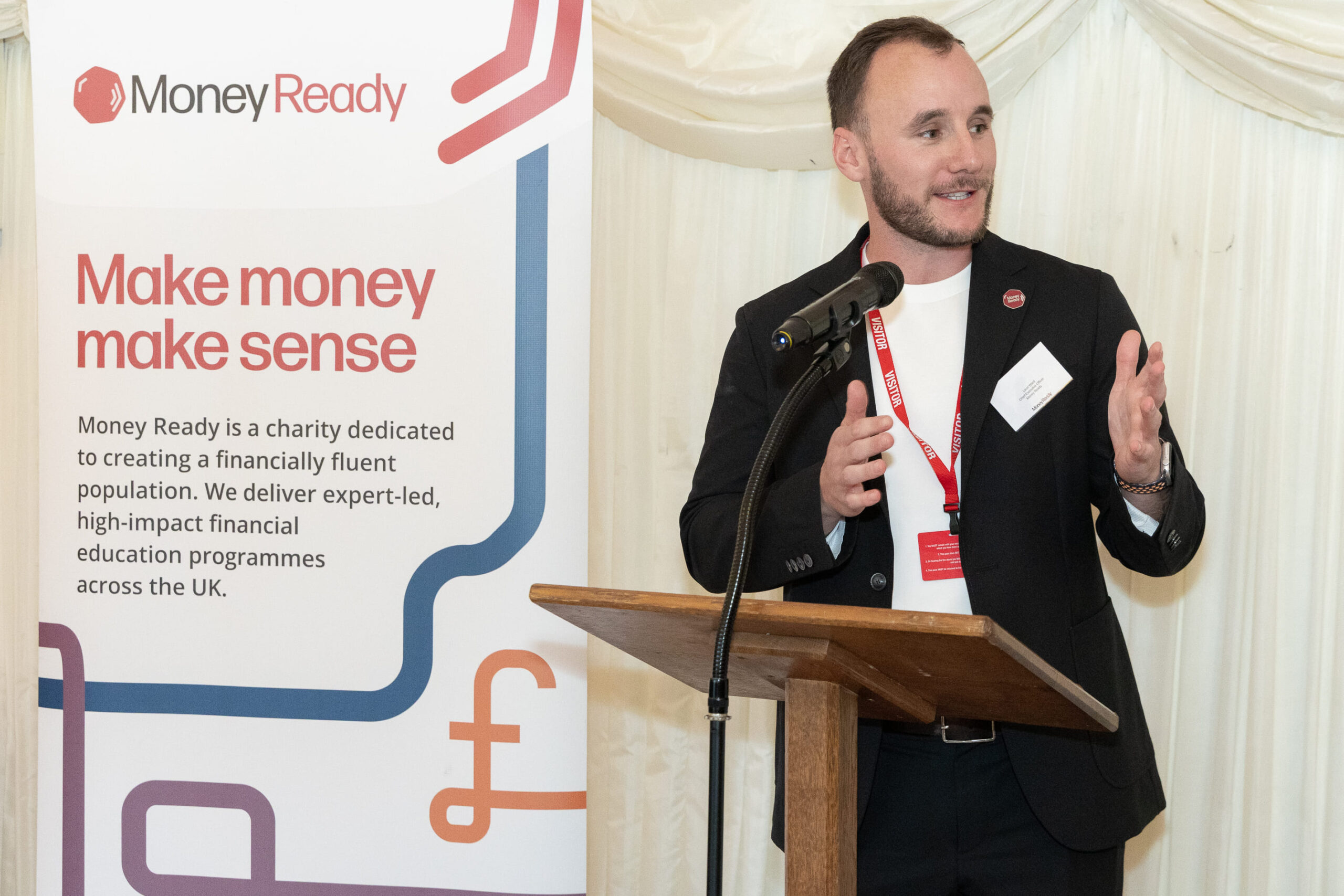
Leon Ward, CEO, Money Ready
“Financial education equips people of all ages to flourish”
Outside the workforce, Ward noted that, in addition to providing financial education in primary and secondary schools, Money Ready helps people manage their money at “key transition stages,” from entering higher education and beginning work to starting a family and buying a home.
Sites like MoneySavingExpert also provide personal finance help for both children and adults, offering a free personal finance course, MSE’s Academy of Money, available through the Open University. The course covers a wide range of topics, from budgeting effectively and income tax to borrowing money responsibly, savings, and pensions.
Of course, our own Salary Calculator helps show the effect that income tax, NI, student loan and other deductions can have on your take-home pay.
Organisations like Citizens Advice, Money Helper, StepChange and Turn2us can also provide guidance and support across a variety of personal finance areas, including debt, budgeting and money management.
“Financial education equips people of all ages to flourish, because the language of money is one we all deserve to understand,” said Ward.
A Deep Dive into Leaseholds and Upcoming Reforms
Leaseholds now account for almost 20% of the UK’s housing stock, and while their numbers have plateaued in recent years, complaints about them have not.
According to figures from the Property Ombudsman (TPO), it received 6,649 complaints about residential leaseholds last year — a 67% year-on-year increase.
Against this backdrop is a wave of reforms, which the government says will “improve the lives of millions of existing leaseholders.” However, the outlook for their implementation remains unclear.
Amidst these upcoming changes, this week at The Salary Calculator, we’ll help break down:
- What is a leasehold?
- How do leasehold charges work?
- What is the Leasehold and Freehold Reform Act 2024?
- What role will a judicial review play in the Act’s implementation?
- What other reforms are ahead?
What is a leasehold?
England’s leasehold system finds its roots in the Middle Ages. Back then, landowners would grant peasants permission to live and work on their land in return for their services or rents. This centuries-old system has evolved over the years, with the Law of Property Act 1925 establishing the foundations of the modern leasehold.
But while many other countries have moved away from this system, leaseholds are now the most common form of flat ownership in England and Wales. London, in particular, has become a hub for this type of ownership structure, with leaseholds accounting for over a third of all homes in the city.

When purchasing a leasehold flat, a tenant enters into a lease agreement with the freeholder to use the property for a fixed term.
Unlike freeholders, leaseholders do not own the building they live in or the land on which it is built.
Occupants are also required to comply with the restrictions detailed in their lease agreement.
Leasehold terms vary, but typically span either 99, 125 or 999 years.
When selling a property, the lease does not reset; instead, it is passed on to the next buyer, with the lease length reducing each year. If the lease ends without an extension, the land and property return to the freeholder.
Shared ownership is a type of leasehold involving the purchase of a share in a home. The shared owner pays the mortgage on their share and rent on the remainder, with the option to increase the share they own over time, a process known as staircasing.
There are around 250,000 shared ownership properties in England, according to the BBC.
How do leasehold charges work?
One of the fees associated with leaseholds is an annual service charge, which is paid to the freeholder. These fees are intended to cover communal repairs and maintenance, whether that’s the lighting in communal areas or fixing a lift.
Ground rent, on the other hand, is a fee paid to the freeholder for the right to occupy the land on which the property is built. The freeholder does not provide a service in return for this fee.
As of 30 June 2022, ground rents on new residential leases were effectively banned — although this doesn’t apply to those with existing leases.
In recent years, controversies surrounding these charges have hit the headlines, with reports of leaseholders facing spiralling service charges and ground rents.
“Service charges keep rising whilst services disappear — and in some cases, have never appeared at all”
According to an analysis by estate agent Hamptons, last year saw record annual increases for service charges in England. In fact, the average annual service charge exceeded £2,000 in every region for the first time. The analysis also showed that for more than half of leaseholders, service charges outstripped their council tax payments.
Elsewhere, The Property Institute’s (TPI) 2024 Service Charge Index found that since 2019, service charges were up 41%, compared with a cumulative inflation rate of 23% over the same period.
Ben Jenkins, a housing campaigner with a shared ownership property, has experienced these rising costs firsthand.
“It was sold to us as a route to stability, but the reality has been very different,” explained Jenkins, who said that it has become “unaffordable, unjust, and unsafe.”
“Service charges keep rising whilst services disappear — and in some cases, have never appeared at all. Our building falls into disrepair, and many are too afraid to withhold payment because of the very real threat of eviction. That’s not ownership. That’s tenancy in disguise,” added Jenkins.
For Jenkins, who described the current system as “fundamentally broken,” the most important change he wants to see is “proper oversight.”
“When things go wrong, there’s no meaningful way to hold landlords accountable. That has to change,” added Jenkins.
Indeed, in a recent report, the London Assembly Housing Committee found that in the capital city, affordability and transparency are key issues within shared ownership and leaseholds more broadly.

The survey revealed respondents paid a median average of £3,912 per year on service charges.
For one in 10, this shot up to over £7,000 a year.
Sem Moema AM, former Chair of the London Assembly Housing Committee, said that often Londoners have “no clear idea of what they are receiving in return for their money.”
What is the Leasehold and Freehold Reform Act 2024?
The government framed the Leasehold and Freehold Reform Act 2024 as a tool to address these affordability and transparency issues.
Receiving Royal Assent in May 2024, the Act outlined various changes, including plans to make it “cheaper and easier” for leaseholders to extend their lease or purchase their freehold, as well as increased transparency around service charges, with the right to request information about them.
“The intention is to swing the pendulum of power away from freeholders”
The Act also removes the ownership condition, making leaseholders immediately eligible to extend their leases.
“The overall intention of it is clearly to swing the pendulum of power away from freeholders and take it more to leaseholders,” said Jill Carey, partner at Freeths, who explained that one of the biggest financial implications of the legislation is the removal of marriage value.
Marriage value refers to the increase in a property’s market value when a leaseholder extends their lease. Under the current legislation, when extending a lease shorter than 80 years, half of this must be paid to the freeholder.
“For leaseholders whose leases are already below 80 years, the impact will be to make extensions cheaper, as it will be removing a third of the calculation of the sum that they have to pay,” Carey said.
However, for leaseholders whose leases have more than 80 years left to run, it’s not so clear-cut, and could even increase the cost, she explained.

According to the government’s Leasehold Advisory Service (LAS), the reforms will be implemented in stages, requiring further consultation and, in some places, secondary legislation.
The government has now launched its consultation on the legislation, which will run until 26 September 2025.
But, leaseholders eyeing the lease extension reforms could be waiting until 2026 to see the changes rolled out, the LAS said.
For those navigating leasehold extensions within the current system, Carey said: “The most important thing is to stay informed and to take expert advice to ensure that you keep yourself in the best position, as it is a changing area.”
Carey noted that, in particular, tenants should be aware of their ground rent charges, as the new statute will cap this at 0.1% of property value.
“This could affect decision-making for anyone who is calculating the cost of extending their lease or buying their freehold,” she said.
“Leaseholders of flats may also want to consider consulting with their fellow tenants on issues such as enfranchisement. However, there are some parts of the law that are yet to be refined, and there is an ongoing [judicial review] by a group of large landlords, and so it may be that some things change before implementation,” added Carey.
What role will a judicial review play in the Act’s implementation?
Indeed, a group of seven freeholders — among them the Grosvenor and Cadogan Estates — were granted permission for a judicial review back in January. In their legal challenge, the freeholders argue that the Act is incompatible with the right to ‘peaceful enjoyment’ of property under the Human Rights Act 1988.
Freeths’ Carey explained that while the court doesn’t have the power to overturn the Act, the aim is to put pressure on the government to “undo it”
“We’ve just seen this happen with that on private school fees,” said Carey. “There, the challenge was lost, but had it gone through, had they won it, the government would then have found itself in a situation where it had a declaration from the court that its law was incompatible with human rights, and that’s what they’re going for here.”
“This could be a very protracted process”
Linz Darlington, the director of leasehold extension specialists Homehold, explained that even if the freeholders lose at the High Court, there are various avenues through which they can appeal.
Further, Darlington highlighted what he called an “intersection” between the legislation’s complexity and contentiousness, whereby each time issues are resolved within the legislation, fresh legal challenges could arise from the freehold community.
“This could be a very protracted process,” he added.
The freeholders’ judicial review will be heard from 15-18 July.
What other reforms are ahead?
While the Leasehold and Freehold Reform Act moves forward slowly, the government is simultaneously working on additional legislation in the form of the Leasehold and Commonhold Reform Bill.
Commonhold is a type of ownership in which homeowners own their property outright without a lease. Homeowners and other unit owners in a building all own and are responsible for the shared parts of the property. The directors of the association also have the option to appoint an external managing agent to manage the commonhold.
Commonholds afford homeowners more control, with zero ground rent, greater service charge transparency and no risk of forfeiture.
This type of ownership was introduced back in 2004 through the Commonhold and Leasehold Reform Act. But, since then, uptake has been low. There are only around 20 commonhold developments across England and Wales today.
 In March, the government published its Commonhold White Paper, the first step in its plan to make commonhold the “default tenure.”
The proposed “ban” on leaseholds would only apply to new flats.
“In theory, this is a great idea,” said Darlington, who explained that the ownership model allows homeowners to buy into a democracy.
However, it’s not without its challenges.
Darlington explained that while the commonhold reforms are likely to apply to new blocks, making them less contentious, it will require different parties — including managing agents, conveyancers, and mortgage companies — to learn and adapt.
“None of this is insurmountable, but it is quite complex,” said Darlington.
Meanwhile, on the homeowner side of things, Carey said challenges can arise in getting everyone within a shared freehold engaged and in agreement.
And while some housing campaign organisations have welcomed the white paper, issues have been raised, including the risk that the legislation could create a two-tier system that leaves existing leaseholders behind.
Katie Kendrick, founder of the National Leasehold Campaign (NLC), argues that commonhold conversion mechanisms are “essential to offer an escape route for those trapped.”
In a statement back in November 2024, Matthew Pennycook, Minister of State for Housing and Planning, said that the government intended to publish a new Draft Leasehold and Commonhold Reform Bill in the second half of 2025.
The end of the Help-to-Buy scheme
The Help-to-Buy scheme came to an end on the 31st of October, with many experts commenting that it leaves behind a “mixed legacy.” You might be curious to learn what’s next for housing schemes, considering that the housing market has been on a bit of a rollercoaster as of late.
So, at The Salary Calculator, we’ll walk you through the following:
- What the Help-to-Buy scheme offered
- When and why it is ending
- Whether there are any alternatives on offer.
The Help-to-Buy scheme
The Help-to-Buy scheme was introduced back in 2013 and offered first-time buyers (FTB) the ability to purchase a new-build property with a minimum 5% deposit. As part of the scheme, the government lent up to 20% of the purchase price – or 40% in London, which was interest-free for the first five years. Participants in the scheme would borrow the rest from a mortgage lender.
Since 2013, 350,000 buyers have used the Help-To-Buy equity loan scheme to purchase homes, and in the last quarter of 2018, it actually accounted for over 60% of all new home purchases.
According to some commentators, the scheme helped many “break free from the shackles of the rent trap and begin to build property wealth.” Likewise, for those who decided to join the scheme, there was no maximum household income cap, and people had 25 years before they needed to pay back the loan in full. However, it was not all sunshine and roses. Help-to-Buy was also only available on new-build homes, meaning that property developers have made a killing. Additionally, it wasn’t offered by all lenders, and after the initial five-year period, those on the scheme would be charged an annual fee of 1.75% on the amount of the outstanding loan, increasing each year with inflation and becoming more expensive over time, repaid in chunks of at least 10%.
When and why is it ending?
As outlined above, the Help-to-Buy scheme was not without its critics and has been criticised for inflating house prices and making housing less affordable. Over the years, the International Monetary Fund (IMF) and the Organisation for Economic Co-operation and Development have highlighted these dangers. Back when the scheme was first introduced, the IMF warned that while the scheme might temporarily “boost confidence” in the housing market, in the long run, the result would ultimately be “mostly house price increases,” working against the government’s aim of stimulating activity in the housing market and boosting access to housing. Years later, in 2022, this was exactly what was found in the House of Lords (HoL) committee report, which found that the scheme was detrimental to FTB and they would have been in a better position if the scheme had never been introduced.
The government has announced that the Help-to-Buy scheme will end in March 2023 without an extension. That said, Housing secretary Robert Jenrick has said that “all options are on the table,” so an extension is not completely off the cards. For example, Adam Day, estate agency growth leader at eXp, said: “With so many changes ahead for the UK Government, there is the possibility we could see a replacement scheme introduced in the coming months. Only time will tell.”
There are some key dates to bear in mind, though. The Help-to-Buy deadline for new applicants was the 31st of October, while applicants will have until March 31, 2023, to complete housing purchases through the scheme. The Help-to-Buy ISA, on the other hand, closed to new savers back in November 2019.
Is anything replacing the Help-to-Buy scheme and what are the alternatives?
As of yet, there are no plans to replace the Help-to-Buy scheme with another similar scheme; however, the Help-to-Buy ISA has already been replaced with the Lifetime ISA (LISA), which offers a similar 25% bonus on savings paid at the end of each tax year. Through the LISA, you can deposit more each year (and over a longer timeframe), meaning that the total bonus can be potentially much bigger.
If you’re looking for an alternative, it’s also worth looking into the First Homes scheme, which was launched in 2021 for FTB and key workers, with the intention of helping them onto the property ladder with a minimum 30% discount on the market price of certain new builds. To apply, you must earn less than £80,000 per year (£90,000 in London) and put down a 5% deposit. However, speaking about this option, Mark Robinson, managing director at Albion Forest Mortgages, commented: “The government has done very little to replace the Help to Buy scheme, announcing the First Homes scheme during the pandemic, but then not really supporting it further. As the First Homes scheme isn’t widely available and doesn’t appear to be changing to be more widely available, it is not really a viable replacement.”
The Deposit Unlock scheme also enables first-time buyers and existing homeowners to buy a new home with a 5% deposit. Robinson made a similar comment about the Deposit Unlock scheme, saying it didn’t offer anything new.
The shared ownership scheme can also be a way of helping first-time buyers get on the property ladder, and works by allowing buyers to secure a mortgage to buy a stake in a property. This is usually between 25% and 75%, with the buyer paying rent on the remaining share they do not own. Stamp duty is also typically deferred until the buyer is able to increase their share to 80%. Of course, there are a number of downsides that come with shared ownership too. For example:
- While only having a percentage share in the property, you are still required to pay full maintenance and repair costs,
- Increasing the stake you own in your property, or “staircasing,” can be expensive (valuation fees, legal expenses, mortgage fees, etc.),
- Due to only owning a share in the property, you’ll likely have to ask the housing provider’s permission in writing to make structural alterations to your home and redecorate.
Mortgage rates and house prices
While Liz Truss recently announced a U-turn on one of the most unpopular items in the mini-budget, scrapping the 45p rate on the highest earners, the effect of the emergency budget has been wide-ranging and is having a huge impact on the housing market.
Breaking news about house prices, mortgage deals and interest rates have hit the headlines, with the UK in financial turmoil. In the hubbub of it all, it might be hard to know where you actually stand, and it’s understandable to be concerned about what the news means for you and your home or housing dreams.
At The Salary Calculator, we’ll explain:
- How interest rates have been affected by the recent budget and what’s going on with mortgage deals
- How house prices are faring
- What the experts are advising
Interest rates and mortgage deals
The Bank of England raised interest rates from 1.75% to 2.25% in September, and following the announcement of the mini-budget, there were predictions that the Bank of England could be forced to raise the base interest rate to 6% next summer. This resulted in nearly 1,000 mortgage packages being pulled overnight from the British market. According to Moneyfacts, 935 out of 3,596 mortgage products were wiped between Tuesday and Wednesday, doubling the record high of 462 back at the start of the lockdown.
This week, it has been announced that the UK’s largest mortgage lenders are putting deals back on the market but also raising rates once more. Moneyfacts outlined on Tuesday that the average new two-year fixed rate jumped to 5.97% – this is despite having already risen to 5.75% on Monday. Halifax, part of Lloyds Banking Group, for example, announced on Wednesday that it would be updating the rates on its homebuyer mortgage rates. The result is that its rate for a two-year fixed deal for a customer offering a 25% deposit is up from 4.61% to 5.84%, while a five-year fix with the same deposit will now stand at 5.44%, and a ten-year fix will be at 5.34%. This is similar across the board.
Alongside those trying to enter the housing market, around 1.8 million fixed deals are scheduled to end next year, meaning that many people are going to be faced with high costs when it comes to taking out a new mortgage.
Of course, the news has been devastating for millions. New research by Property Rescue, which considered the perspectives of over 1,000 UK-based homeowners, found that over a third of homeowners are worried they may have to choose between heating bills and mortgage payments. Not long ago, there were reports of people having to choose between food and heating; now, the roof above their heads is in question. The study, conducted by Perspectus Global, found that 41% will now have to turn to their savings, and 21% believe they may have to sell their homes due to skyrocketing mortgage interest rates.
Speaking to those who are concerned about their mortgage prospects, Rachel Springall, a finance expert at Moneyfacts.co.uk, said: “Seeking advice from an independent broker would be wise, especially for those borrowers who have not yet started the mortgage process and are deterred by the level of choice and much higher mortgage rates than they were perhaps anticipating.”
House prices to fall
While statistics had recently shown that average asking prices were 8.7% higher in September than a year ago, following the mini-budget fiasco, house prices are now projected to fall, at least in London, according to estate agent Knight Frank. Specifically, the agent predicted a fall in the average house price by 10% over two years. Similarly, Capital Economics predicted that “despite the reduction in stamp duty,” this is the beginning of the most “significant correction” in house prices since 2007. They added: “The sharp rise in interest rates now expected means that prices are more likely to fall by 10-15% than the 7% we previously anticipated.”
Pantheon Macroeconomics senior UK economist Gabriella Dicken, on the other hand, while projecting a more conservative fall in house prices, said it “was the start of a prolonged fall in house prices” and that she expected “house prices to fall by around 5% over the next 12 months”.
Discussing the recent impact on interest rates and mortgage deals, Sarah Coles, senior personal finance analyst at Hargreaves Lansdown, said: “It’s difficult to see this as anything other than a sign of things to come, as these pressures raise the risks not only that price rises stagnate, but that they begin to fall. There is the chance that we could see a significant correction in the coming months.”
What are the experts advising
With so much uncertainty around the housing market, some mortgage experts are advising those on a fixed rate with a term of 18 months or less to reach out to their broker and consider their remortgage options. Meanwhile, Martin Lewis says that people should only overpay if their mortgage rate is higher than the rate they’d earn saving: “As a simple example, £10,000 in savings at 2% earns £200 for the year, yet use it to overpay a 3% mortgage and it reduces costs by £300 for the year. Effectively overpaying is tax-free ‘saving’ at the mortgage rate, so if the rate’s higher than savings (after tax) it wins,” he said.
For those entering the housing market for the first time, Chris Sykes at Private Finance, a mortgage broker, said it’s important to make sure your finances are in order and your credit score won’t let you down. He explained: “Borrowers need to be careful in tough times, as something as small as getting a CCJ [county court judgment] by refusing to pay a £60 parking fine, or missing payments on utility bills after moving out of a property, can affect the lenders at a borrower’s disposal, and affect their interest rates if these were recent and they have little other credit presence.”
Ultimately, make sure to think things through and access independent advice before you jump into any decisions related to your mortgage and housing. Moreover, if you’re struggling with mortgage payments, reach out for help as soon as you can. The likes of Citizens Advice, StepChange, or National Debtline can be of help here.
Categories
Tags
-
50% tax
2022
April 2010
April 2011
April 2012
budget
coronavirus
cost of living
cost of living crisis
covid-19
debt
dollar
economics
Economy
election
Employed and Self Employed
Foreign Currency
foreign exchange rates
HMRC
holiday
holiday money
house prices
houses
income tax
interest rates
Jobs
Loans
Mortgages
national insurance
Pay As You Earn
pension
Pensions
personal allowance
pound
recession
recovery
savings
Self Assessment
self employed
self employment
student loans
tax rates
The Salary Calculator
unemployment
VAT
Sponsored Links
Archive
- February 2026
- January 2026
- December 2025
- November 2025
- October 2025
- September 2025
- August 2025
- July 2025
- June 2025
- May 2025
- April 2025
- March 2025
- November 2023
- September 2023
- August 2023
- July 2023
- June 2023
- May 2023
- April 2023
- March 2023
- February 2023
- January 2023
- December 2022
- November 2022
- October 2022
- September 2022
- August 2022
- July 2022
- June 2022
- May 2022
- April 2022
- March 2022
- February 2022
- January 2022
- December 2021
- November 2021
- October 2021
- September 2021
- August 2021
- July 2021
- June 2021
- May 2021
- April 2021
- February 2021
- January 2021
- December 2020
- November 2020
- October 2020
- September 2020
- August 2020
- July 2020
- June 2020
- May 2020
- April 2020
- March 2020
- February 2020
- November 2019
- September 2019
- April 2019
- March 2019
- December 2018
- April 2018
- March 2018
- January 2018
- May 2017
- March 2017
- February 2017
- September 2016
- June 2016
- March 2016
- February 2016
- January 2016
- June 2015
- April 2015
- March 2015
- February 2015
- January 2015
- November 2014
- October 2014
- July 2014
- June 2014
- May 2014
- March 2014
- February 2014
- January 2014
- November 2013
- October 2013
- August 2013
- July 2013
- June 2013
- May 2013
- April 2013
- March 2013
- February 2013
- January 2013
- December 2012
- November 2012
- October 2012
- September 2012
- August 2012
- July 2012
- June 2012
- May 2012
- April 2012
- March 2012
- February 2012
- January 2012
- December 2011
- October 2011
- May 2011
- April 2011
- March 2011
- January 2011
- December 2010
- August 2010
- July 2010
- June 2010
- May 2010
- April 2010
- March 2010
- February 2010
- January 2010
- December 2009
- November 2009
- October 2009
- September 2009
- August 2009
- July 2009
- June 2009